It wasn’t long ago that urban infill was a niche market dominated by a select few. Not anymore. With land in scarce supply and prices skyrocketing, it’s no wonder that more than a handful of volume builders have gone sniffing for new profit centers and launched infill divisions. Empty-nesters are repopulating downtown neighborhoods with money to burn, and the principles of transit-oriented smart growth are gaining cachet.
But as newcomers to the block have discovered, it’s a jungle in there. The rules governing traditional greenfield development don’t necessarily apply. Would-be city slickers must contend with myriad roadblocks, from NIMBY wars to historic preservation standards to the integrity of adjacent structures. And as these projects demonstrate, infill is an animal that’s not easily tamed. Every project comes with its own surprises.
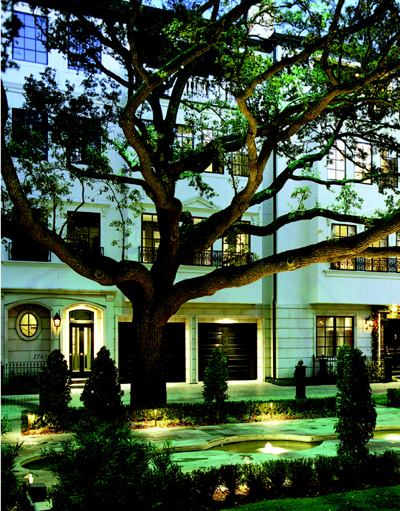
No English garden is complete without a monopteros. At Cheyne Walk, the gazebo-like structure is carved from the same white limestone as the building façades.