Attaching Deck Rail Posts

Most states now require a specific bolted connection on decks. Here’s a look at how it’s done.
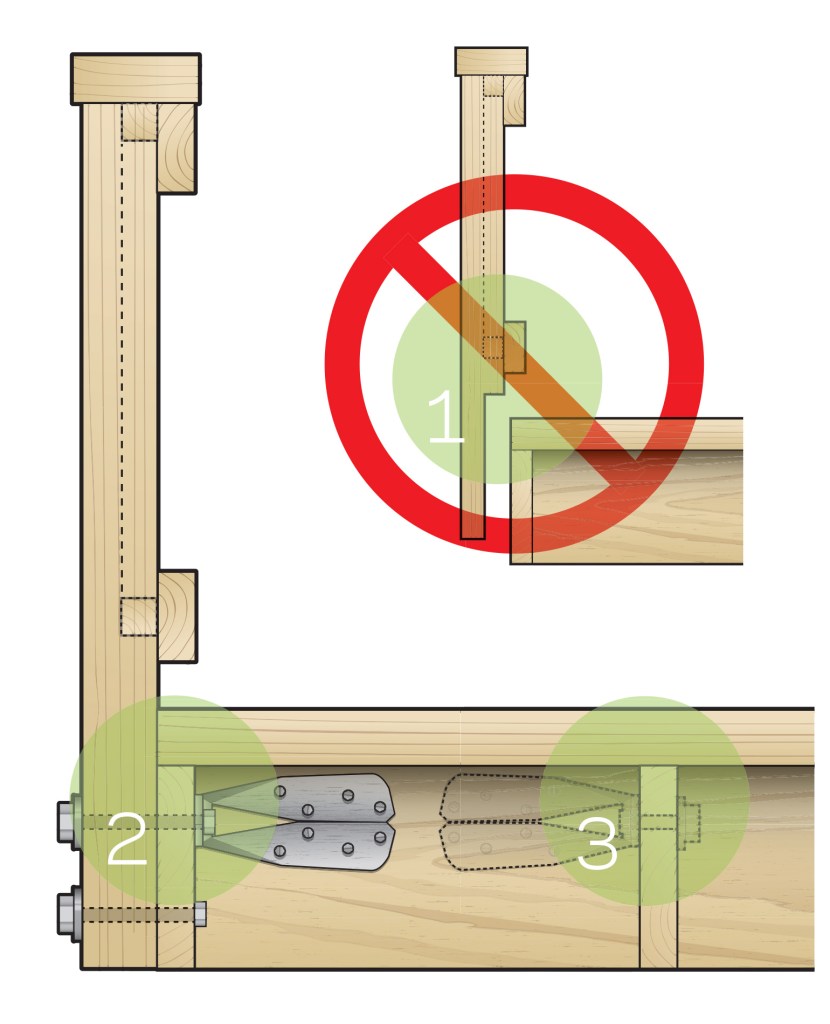
1. No More Notching Carpenters used to routinely notch out the base of deck posts to slip them over the band joist. That’s now ruled out, along with using nails to make the connection.
2. Through Bolting and Tension Ties At the band joist, codes now call for a double set of threaded bolts with nuts and washers, sent through the post and floor joists. Tension ties are required to augment the upper bolt.
3. Tied Back Blocking Where a post is connected to an edge joist that runs parallel to the other joists in the floor, blocking and steel connectors are required to tie the bolted connection back to the next joist in.


Pete Sucheski

1. No More Notching Carpenters used to routinely notch out the base of deck posts to slip them over the band joist. That’s now ruled out, along with using nails to make the connection. 2. Through Bolting and Tension Ties At the band joist, codes now call for a double set of threaded bolts with nuts and washers, sent through the post and floor joists. Tension ties are required to augment the upper bolt. 3. Tied Back Blocking Where a post is connected to an edge joist that runs parallel to the other joists in the floor, blocking and steel connectors are required to tie the bolted connection back to the next joist in.

Codes are getting tougher on outdoor decks. Most states now require a specific bolted connection where deck rail posts attach to the floor frame, with reinforcement for joists and blocking. Here’s a look at how it’s done.

About the Author

Ted Cushman

Contributing editor Ted Cushman reports on the construction industry from Hartland, Vt.

Upcoming Events

  • What 50,000 Home Builder Conversations Tell Us

    Live Webinar

    Register Now
  • Sales is a Sport: These Tactics Are the Winning Play

    Webinar

    Register Now
  • Sales & Marketing Leadership Summit by Shore Consulting

    San Diego, CA

    Register Now
All Events